
Guide
New to vinyl? How to keep up with new pressings without missing out
 By Surface Noise
Updated
29 min read
The short answer
Most new vinyl is sold as a preorder weeks before it comes out, and limited pressings often sell out during that window. To keep up, you need to hear about records when preorders open, not on release day. The simplest way is to let Surface Noise do the watching: a free weekly email covering new releases, reissues, limited editions and restocks in shoegaze, post-rock, dreampop, indie and the music around them, each with a link to buy direct at the original retail price.
If you’ve recently started collecting, you’ve probably had this moment: someone posts a beautiful coloured pressing, you go to buy it, and it’s gone. They ordered it weeks ago. It isn’t bad luck, and it isn’t that you’re not dedicated enough. Vinyl simply works differently from most things you buy, and once you know how, it gets much easier. This guide explains how releases work and what all the editions mean, from speeds and sizes to first pressings, masters, bootlegs and Record Store Day. It covers the mistakes nearly every new collector makes, how to look after your records, and how to set yourself up so you stop missing the ones you want.
How a vinyl release works
A new record usually moves through the same stages. Knowing where a record is in that cycle tells you how urgently you need to act.
The release cycle
- 01AnnouncedNothing to buy yet
- 02Preorders openAct now: limited editions sell here
- 03ReleasedStandard pressings usually available
- 04Sold outResale markups appear
- 05Restocked or repressedSecond chance at retail
| Stage | What’s happening | What it means for you | How Surface Noise helps |
|---|---|---|---|
| Announced | The label or artist reveals the record, sometimes without a date or a way to order | Nothing to buy yet | We wait until you can order it, so every entry is actionable |
| Preorders open | The label and record shops take orders ahead of release, often with limited colourways | The most important moment: limited editions often sell out here | We cover records in this window, with a direct link to preorder |
| Released | The record ships and reaches shops | Standard pressings are usually still available; limited ones may be gone | New releases are included the week they land |
| Sold out | The pressing is gone from the label and shops | Resale listings appear, often at a big markup | We don’t send you to resellers |
| Restocked or repressed | A shop gets more copies, or the label presses the record again | Your second chance, at the original price | Back-in-stock records and represses are part of every issue |
The key thing to take from this: the preorder window is where most limited records are won or lost. Hearing about a record on release day is often too late for the coloured or numbered editions.
Selling out isn’t always the end, either. Popular records often come back as a restock or a repress, and a repress at the original price is almost always a better deal than a resale listing.
Editions explained
One album can come out in several versions at once, and they don’t all sell the same way. Here’s what you’ll see:
| Edition | What it is | How fast it goes |
|---|---|---|
| Standard black vinyl | The main pressing, made in the largest numbers | Usually available for longest, and most likely to be repressed |
| Coloured vinyl | The same record pressed in a colour, splatter or marble effect | Often limited, and often the first to sell out |
| Shop or label exclusive | A variant sold only by one record shop or the label’s own store | Only available in one place, so easy to miss entirely |
| Limited or numbered edition | A fixed run, sometimes hand-numbered, such as “edition of 500” | Once it’s gone, it’s gone, unless the label decides otherwise |
| Signed edition | Copies signed by the artist, usually few in number | Tends to go very quickly |
| Deluxe edition or box set | Extra discs, books, prints or bonus material | Higher price and smaller runs; anniversary sets can be highly collectible |
| Reissue | An older album pressed again, often remastered or with new artwork | Standard reissues usually stay available; limited variants don’t |
| First time on vinyl | An album that was never released on vinyl before | Often in demand from fans who’ve waited years |
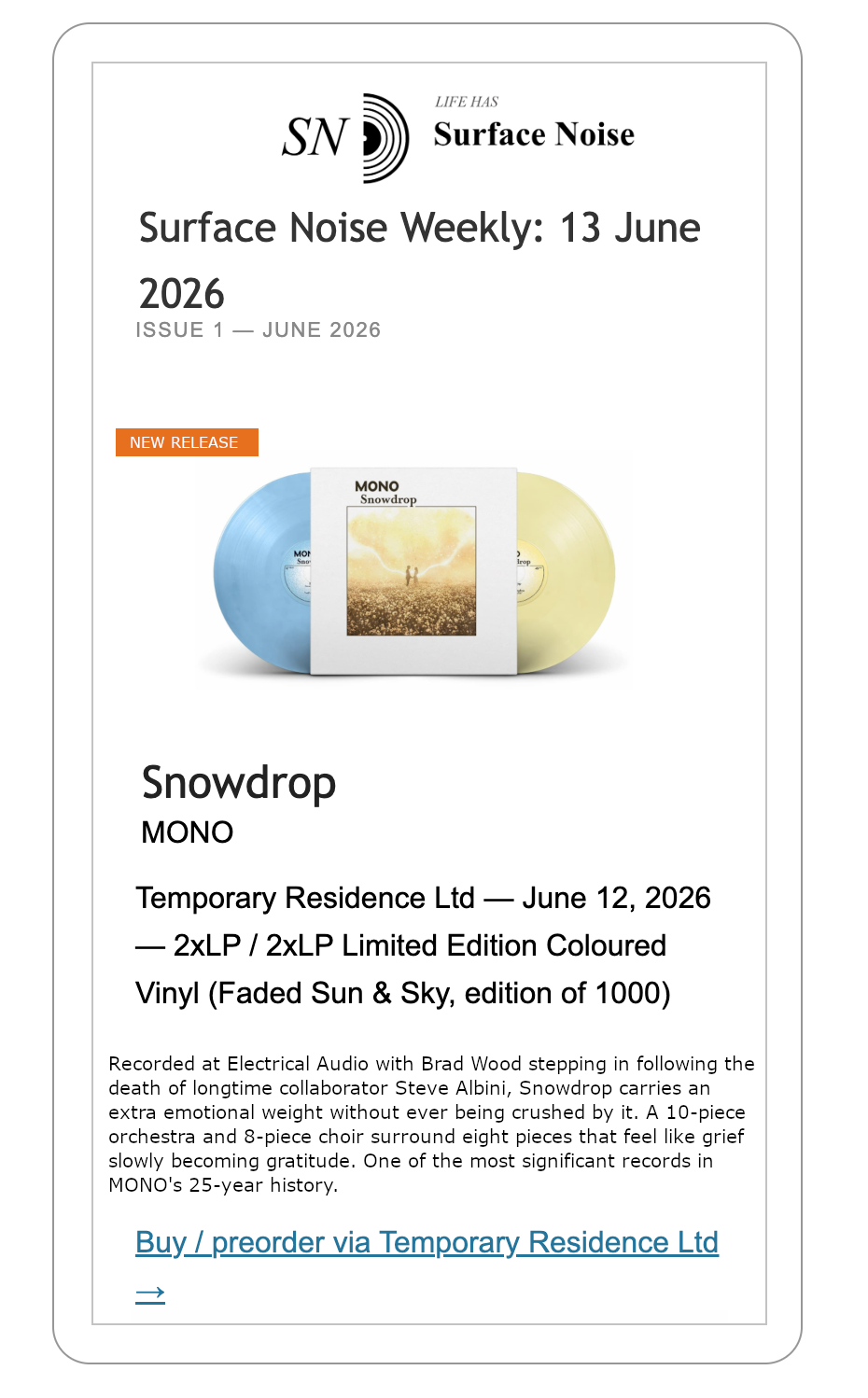
When you read a Surface Noise entry, the exact format is spelled out in the source’s own words: number of discs, colourway and edition size, such as “2xLP, limited coloured vinyl, edition of 1,000”. You’ll know what you’re buying and how limited it is before you click.
Speeds and sizes: 33, 45, 7″, 10″ and 12″
Records are made in three main sizes and play at two main speeds, measured in revolutions per minute (rpm).
| Format | Usual speed | Typically used for |
|---|---|---|
| 7″ | 45 rpm | Singles, with a song or two on each side |
| 10″ | 33⅓ or 45 rpm | EPs, mini-albums and special editions |
| 12″ | 33⅓ rpm, sometimes 45 | Albums, EPs and 12″ singles |
33⅓ rpm is the standard for albums. The slower speed fits more music on each side, which is why most albums fit on a single 12″ disc.
45 rpm is the standard for 7″ singles, but some albums are pressed at 45 on 12″ discs too. The faster speed gives each second of music more groove to work with, which many listeners find sounds more detailed and dynamic. The catch is that less music fits on each side, so a 45 rpm album is often spread across two or three discs, and costs more.
Tip: Always check the label or sleeve before you play a record. At the wrong speed, it’ll sound slowed down or sped up. Most turntables switch between 33 and 45 with a button or switch.
Picture discs and etched vinyl
Some records are made to be looked at as much as listened to.
One album, four ways: Rage Against the Machine
01 Black vinyl
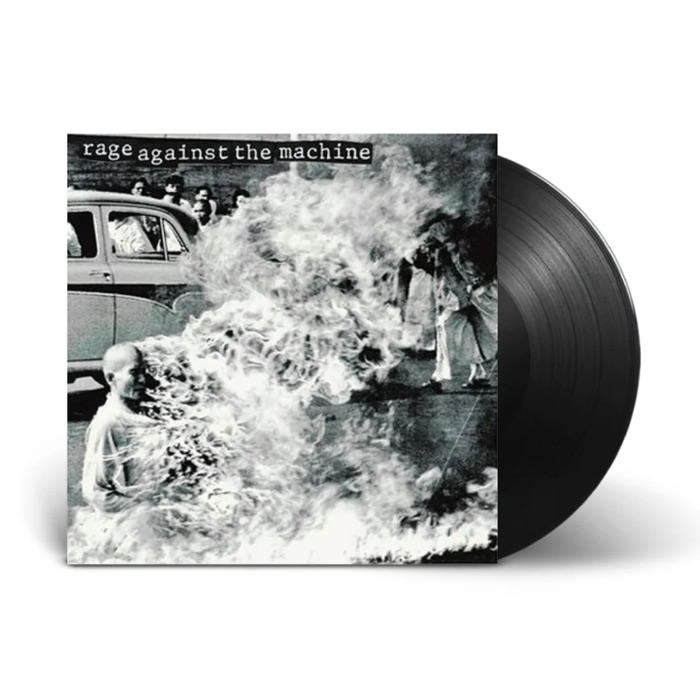
The standard pressing in a printed sleeve, made in the largest numbers. Usually available for longest, and most likely to be repressed.
02 Picture disc
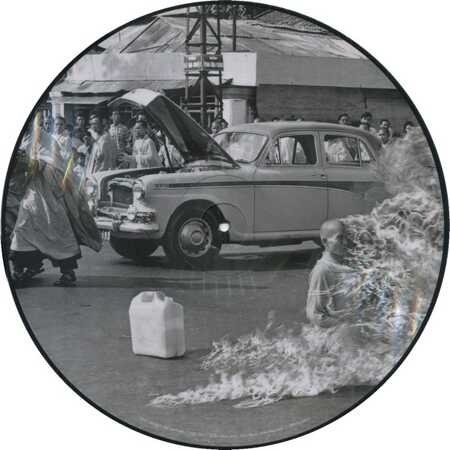
Artwork is sealed between clear layers of vinyl, so the disc itself is the artwork.
03 Coloured vinyl


The same record pressed in a colour, clear, splatter or marble effect. Often limited, and often the first to sell out.
04 Etched vinyl

A design is cut into one side instead of grooves. That side doesn’t play; it’s there as artwork.
Picture discs have artwork printed into the record itself: an image is sealed between clear layers of vinyl, so the disc is the artwork. They’re popular for their looks and often made in limited runs. The trade-off is sound: picture discs tend to have more surface noise than standard pressings, so many collectors buy one to display and a standard copy to play.
Etched vinyl has a design cut into one side of the record instead of grooves. That side doesn’t play; it’s there as artwork. You’ll often see it on singles, or on albums with an odd number of sides, where a double LP has three sides of music and a fourth side etched with a design. The playing sides work as normal, and the etched side makes the record a small piece of art in its own right.
First pressings: why everyone wants the original
A first pressing is the first batch of a record made when it was originally released. It’s the version that was in shops the week the album came out, and for many collectors it’s the one to own.
Why they’re so sought after:
You can usually identify a first pressing from details on the record: the catalogue number, label design, and the codes etched into the runout, the smooth space between the last groove and the label. Collectors compare these against published pressing details to tell an original from a later repress.
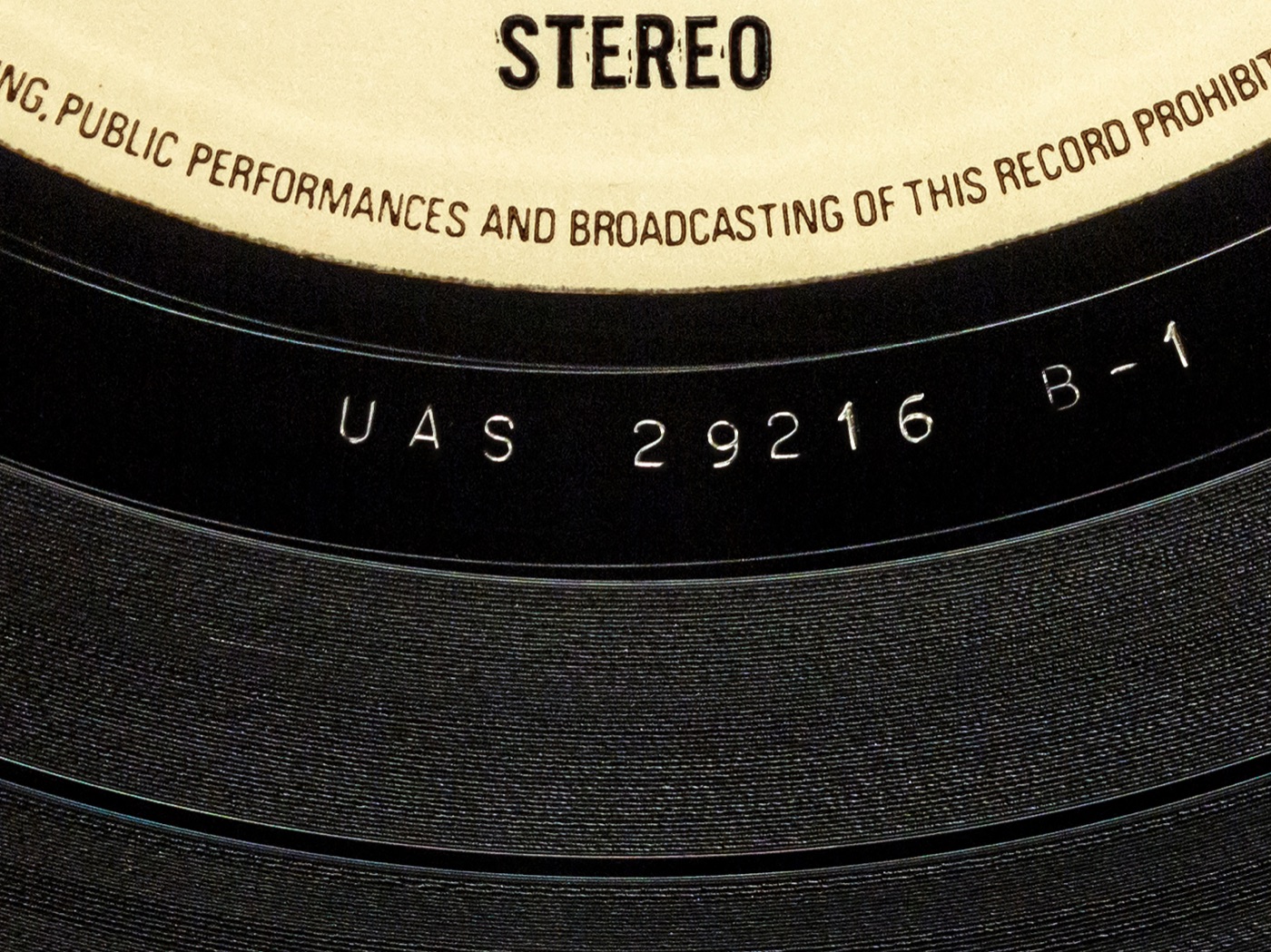
Not every first pressing is valuable. Value depends on the album, the demand and the condition. But here’s the part new collectors often miss:
Today’s new releases are tomorrow’s first pressings. Buy a new record during its preorder window and you’re getting the first pressing, at the original retail price, direct from the label or shop. That’s exactly what Surface Noise is built to help you do.
Masters, remasters and re-recordings
Two copies of the same album can sound noticeably different. The reason is usually the master: the finished version of the recording that every copy is made from.
The original master is the version made when the album was first released.
A remaster is a later rework of that recording, usually from the original tapes or files, often for a reissue. It can bring out detail, or change the character of the album entirely.
A re-recording is the artist recording the songs again from scratch. It’s a new performance, so it will never sound exactly like the original.
There’s also a question most fans never think about: who owns the master? Often it isn’t the artist. The recording frequently belongs to the record label, while the artist keeps the songwriting. The owner of the master decides whether an album is reissued, how, and in what version. If an artist and a label part ways, an album can go out of print for years, or come back in a version the artist never approved.
Case study
My Bloody Valentine’s Loveless
Few records show this better than Loveless, the 1991 album that defined shoegaze. It came out on 4 November 1991 on Creation Records in the UK and Sire, part of Warner Bros., in the US. Soon after its release, Creation dropped the band.
In the UK, the album was pressed on vinyl in 1991, and those original Creation pressings are still prized. In the US, it came out only on CD and cassette. The first US vinyl pressing didn’t arrive until 2003, licensed from Warner by a label called Plain Recordings. Kevin Shields later said that pressing wasn’t sanctioned by the band, and that it was mastered from a CD rather than the original tapes.
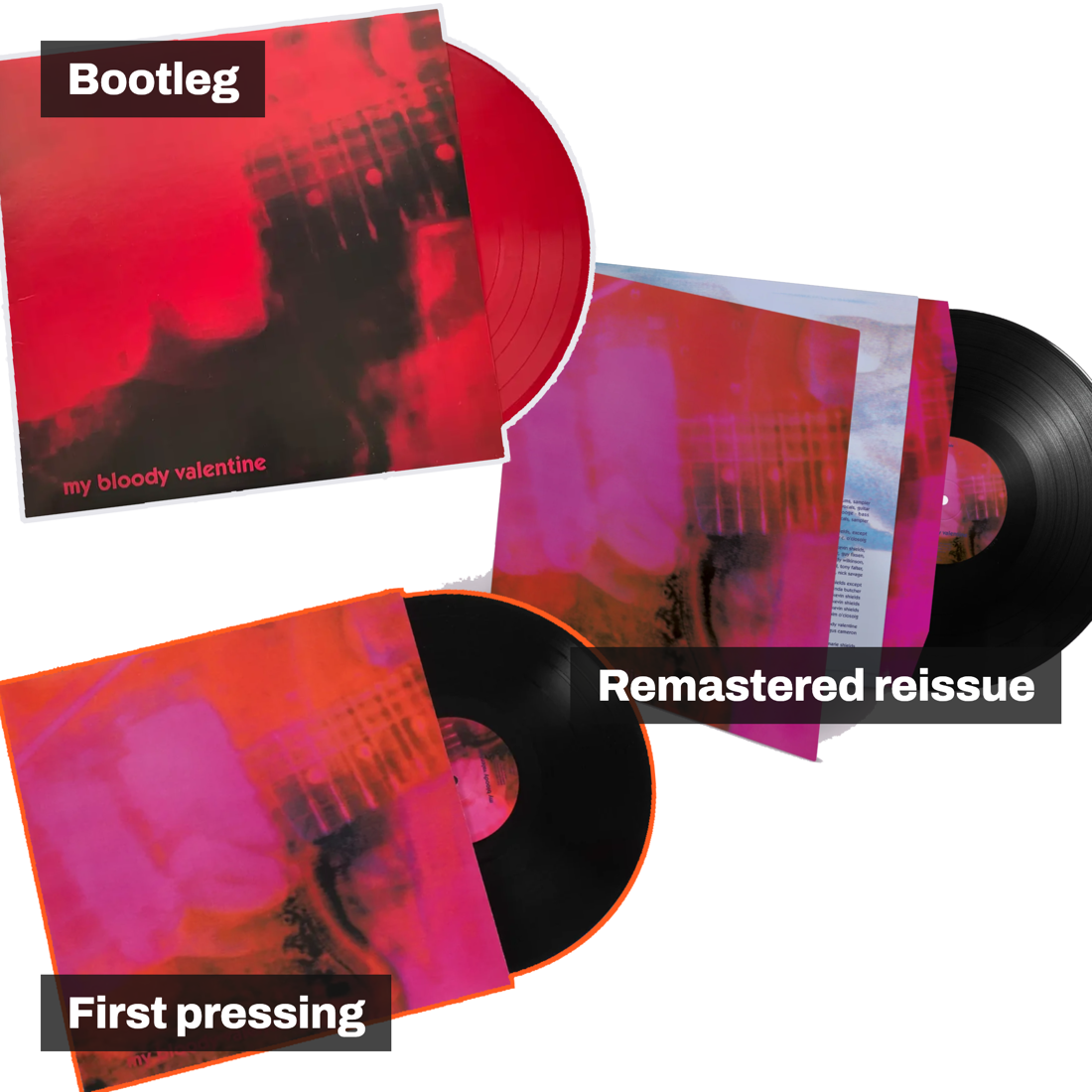
Loveless on vinyl, 1991–2021
- 1991UK vinyl on Creation. US: CD and cassette only.Original
- 2003First US vinyl, Plain Recordings. Mastered from CD.Not sanctioned
- 2018Band’s own fully analogue cut from the original tapes.Official
- 2021Domino reissue, analogue and digital, overseen by Shields.Official
For years, a fan who wanted Loveless on vinyl had three options: hunt down an original 1991 pressing, buy a pressing the band had disowned, or buy a bootleg. That changed in 2018, when the band released its own fully analogue cut from the original tapes, and again in 2021, when Domino reissued the album in analogue and digital versions overseen by Shields.
Today, collectors still debate which Loveless sounds best. Some swear by the 1991 originals; others prefer Shields’ later analogue cuts. What nobody disputes is that the version matters, and that for years the band didn’t control how their most famous record reached people.
Case study
Taylor Swift’s re-recordings
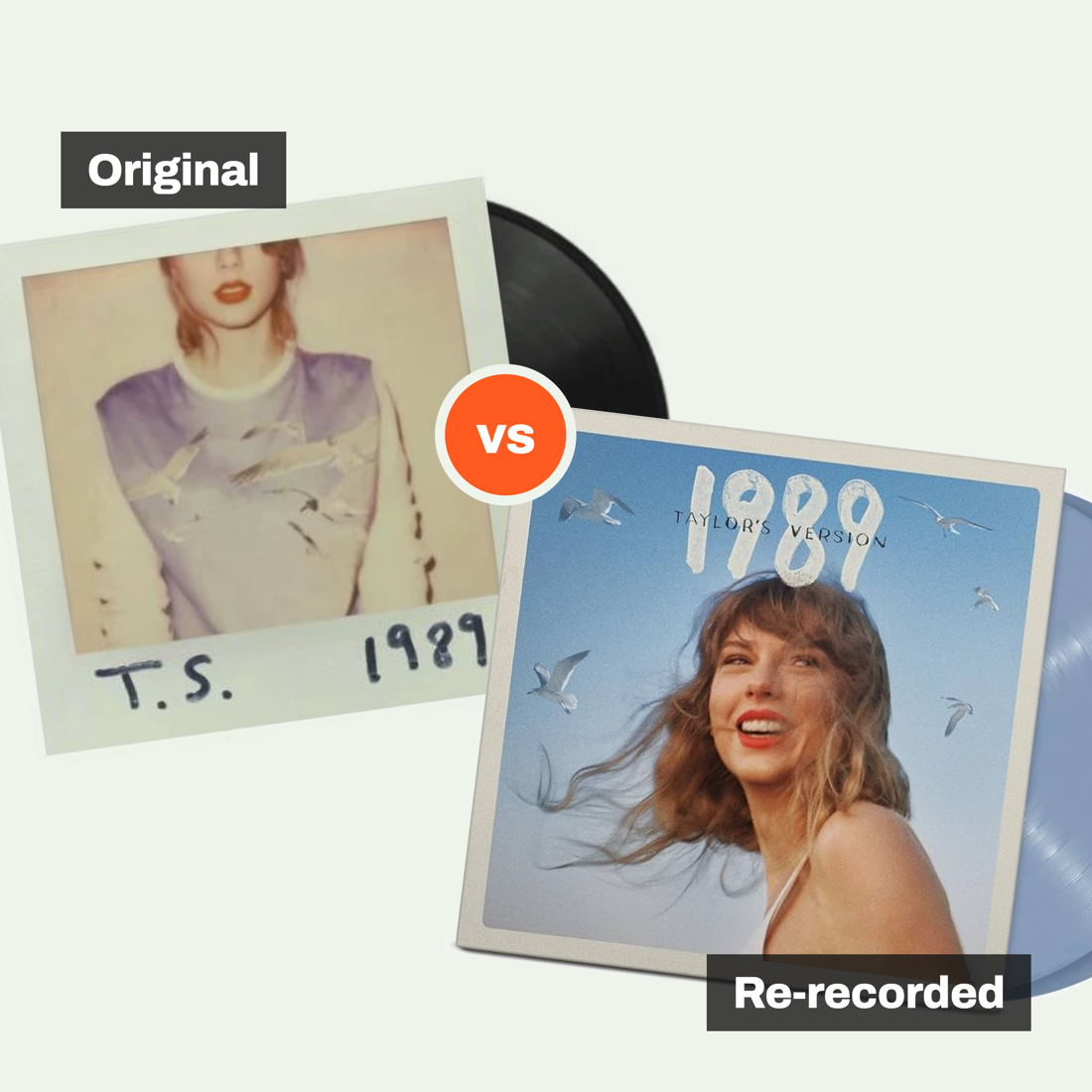
Taylor Swift is well outside the scenes Surface Noise covers, but her story is the best-known example of who owns a master. The master recordings of her first six albums belonged to her original label, Big Machine, under a contract she signed as a teenager. In 2019 the label was bought by Scooter Braun, taking her masters with it, and in 2020 they were sold again to the investment firm Shamrock Capital.
Swift still owned the songwriting, so she did something few artists could: she re-recorded the albums herself and released them as “Taylor’s Version”, starting with Fearless (Taylor’s Version) in 2021. In May 2025, she finally bought the original masters back.
For collectors, the lesson is simple: the original recording and a re-recording are two different records. They were made years apart, by the same artist, at different points in her life, and they will never sound the same.
What this means when you buy
When a reissue is announced, the label will often say how it was made, such as “remastered” or “cut from the original analogue tapes”. That detail tells you which version of the album you’re buying. When it’s part of the announcement, it’s worth paying attention to.
Demos: the versions that came first
Before most bands get near a proper studio, they record their songs wherever they can: a bedroom, a basement, a friend’s home setup, or a small local studio on a tiny budget. These early recordings are demos. Some are sent to labels and radio; some come out as early singles or EPs on small independent labels.
When a band later signs a bigger deal and makes their debut album, they often re-record those same songs with a producer and a bigger budget. The album version is the one most people hear. The demo is the one the earliest fans remember.
Example
Bloc Party’s “Banquet”
Bloc Party’s “Banquet” first came out in May 2004 as a double A-side single with “Staying Fat” on Moshi Moshi, a small London label, and it also appeared on the band’s early Bloc Party EP. As the buzz grew, the band turned down an offer from a major label and signed with the London independent Wichita instead. For their 2005 debut album Silent Alarm, produced by Paul Epworth, they re-recorded “Banquet” from scratch, and that new version was released as a single that April. It became their breakthrough, especially in North America.
One song, two recordings · listen to both
May 2004 · Demo-era
Banquet / Staying Fat
Double A-side on Moshi Moshi. Also on the Bloc Party EP. Rawer and sparser.
April 2005 · Album version
Silent Alarm
Re-recorded on Wichita, produced by Paul Epworth. Bigger, more polished studio production.
The two versions share a title, but they are not the same recording, and they don’t sound like the same song. The original on the “Banquet / Staying Fat” single and the Bloc Party EP is rawer and sparser. The Silent Alarm version is a bigger, more polished studio production. Most people who discovered the band through the album have only ever heard the second one, and many don’t know the first exists. The fans who were there from the start often still prefer the original, and hold on to those early records as proof they found the band before everyone else did.
Why demos matter to collectors
If you love a band’s debut album, it’s worth finding out what came before it. And when an anniversary edition promises demos, that’s often the first chance to own them on vinyl.
Alternate versions: acoustic, unplugged and reimagined albums
Sometimes a band revisits its own songs and turns them into something new. The songs are the same, but the record is completely different.
Acoustic and unplugged albums strip away electric guitars, synths and effects, and rebuild the songs with acoustic guitars, piano and other acoustic instruments. Many are recorded live in front of an audience.
Orchestral or reimagined albums go further, reworking the songs with strings, piano or other arrangements, sometimes without vocals at all.
Example
Minor Victories’ Orchestral Variations
Minor Victories, the band formed by Rachel Goswell of Slowdive, Stuart Braithwaite of Mogwai, Justin Lockey of Editors and his brother James, released their self-titled debut in 2016. A few months later came Orchestral Variations: an instrumental reimagining of the same album, with the vocals stripped out and the songs rebuilt around strings, piano and other orchestral textures. Justin Lockey described it as taking the songs back to their bare bones and piecing them together into an entirely new record.
It’s a good example of why these records matter to collectors. If you love the original album, the reworked version lets you hear the songs in a new way. And they often come out in smaller numbers: Orchestral Variations first appeared in the US as a double vinyl release for Record Store Day’s Black Friday event in November 2016, before its wider release in January 2017.
What to know as a collector
An alternate version isn’t a replacement for the original album; it’s a companion to it. Because they’re usually made for existing fans rather than a wide audience, they’re often pressed in smaller quantities, which means they can be easy to miss and hard to find later.
Anniversary editions
When an album turns 10, 20 or 30, it’s now common for the label to reissue it as an anniversary edition. These usually go well beyond a simple repress: a remastered album, a disc or two of bonus material, a book or booklet of photos and notes, and sometimes posters, prints or replica memorabilia. They’re often priced at a premium, and the most elaborate versions are made in limited numbers.
Example
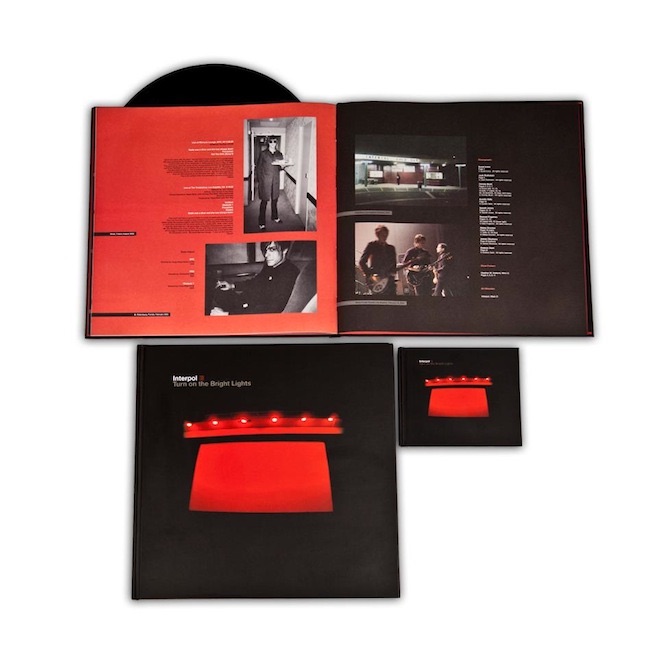
Interpol’s Turn On The Bright Lights
Interpol’s 2002 debut Turn On The Bright Lights got a 10th anniversary edition from Matador in 2012. Alongside the remastered album, it included a disc of 17 bonus tracks: demos from 1998, 1999 and 2001, early songs such as “Specialist” from the band’s 2002 EP, a previously unreleased track, and four songs from their 2001 John Peel session. It also came with a DVD of music videos and early live footage, and a hardbound book of rare photos.
For fans, that was the point: songs from early EPs and demo tapes that had been hard or impossible to find were suddenly available in one place, alongside the album they led to. It’s also a good example of checking the details before you buy. On the vinyl edition, some of the bonus tracks came as a download included with the record rather than on the vinyl itself.
Bloc Party did something similar with Silent Alarm‘s 20th anniversary in 2025: a four-LP white vinyl edition pairing the original album with B-sides, rarities and previously unreleased demos, plus a booklet of photos and liner notes.
Are anniversary editions worth it?
It depends on what you want. If you already own the album, the value is in the extras: demos, B-sides and rarities that may never have been on vinyl before. If you don’t, an anniversary edition can be the best-sounding and most complete way to own it. Either way, read the tracklist and format details closely, so you know which bonus material is actually on the vinyl.
Before you buy, check
- Which bonus tracks are on the vinyl, and which are a download
- How many discs are included
- Whether the extras (book, prints) come with the vinyl edition
- Whether it is a limited run
Surface Noise covers anniversary editions as soon as they’re available to order, with the format and edition details spelled out, and a link to buy direct at the original retail price.
Bootlegs: unofficial records
A bootleg is a record made and sold without the permission of the artist or the label that owns the recording. There are three main kinds:
Unofficial pressings of albums often appearing when an album is out of print or has never been released on vinyl, and sometimes in coloured vinyl no official edition ever used.
Counterfeits made to look like an official release, sometimes sold to buyers who don’t realise.
Live bootlegs where a fan’s recording of a concert is pressed onto vinyl.
Bootlegs usually exist because fans want something they can’t get legitimately. Loveless is a good example. During the years it was hard to find on vinyl, unofficial pressings, including coloured editions marked “Made in Europe 2013”, circulated widely and even turned up in record shops. Plenty of fans bought them knowing exactly what they were, because it was the only affordable way to own the album on vinyl, and some still keep them.
Live bootlegs have a long history of their own. Fans record a show, share it with other fans, and sometimes it ends up pressed onto vinyl, a way to relive a night that was never officially released. They’re made by fans, for fans, and rarely make anyone much money.
Still, bootlegs are unofficial by definition. The artist usually isn’t paid, sound quality is often poor because they’re copied from CDs or other copies, and a bootleg sold as an original is simply a fake.
Surface Noise never lists bootlegs: every record we feature is an official release, linked to wherever the artist or label is selling it.
Record Store Day: the good and the not so good
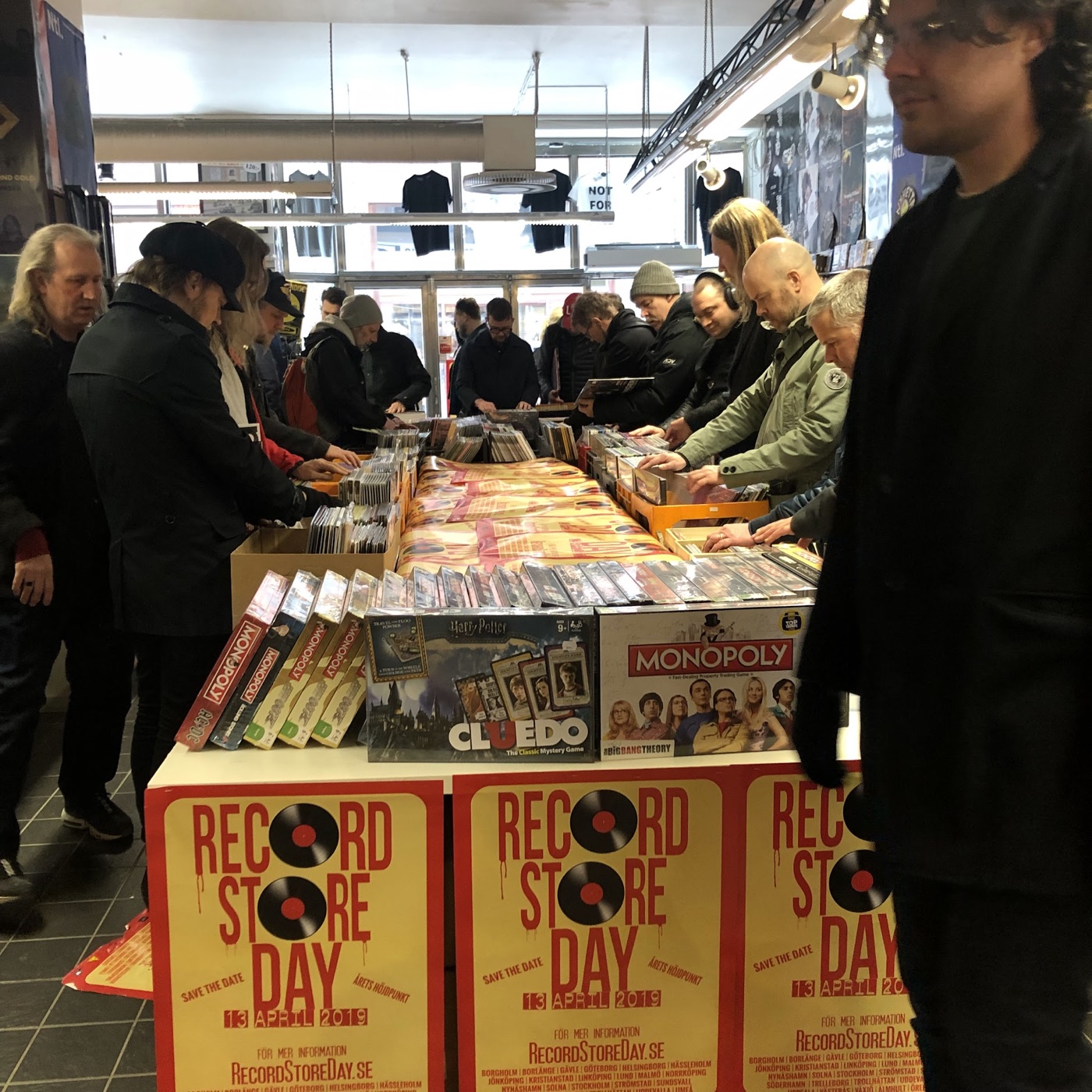
Record Store Day is an annual celebration of record shops. It was dreamed up in the US in 2007 by a group of record shop owners and staff, and first held in 2008. It now takes place every April in participating shops around the world, with a smaller follow-up event around Black Friday in some countries.
On the day, labels release exclusive records, often limited pressings, special editions, reissues and coloured variants, sold through participating record shops. Many shops open early, and queues outside are part of the tradition.
Why it’s a good thing
- It gets people into record shops. Record Store Day began at a time when shops were closing as music moved to downloads. It gave people a reason to walk through the door again, and it’s widely credited with helping the vinyl revival.
- There are genuinely great releases. Some bands put out new music or long-requested reissues specifically for the day.
- It’s a community event. In-store performances, queues full of people who love the same music, and shops at their busiest.
What’s frustrating about it
- Flippers. Because releases are limited, some people buy them only to resell. Records can appear on resale sites at a markup the same day.
- Filler. Not every release is essential. Some are B-sides, picture disc versions of albums already available, or records bought mainly because they’re limited.
- Luck of the draw. Each shop gets its own allocation, so what’s available depends on where you go and how early you get there.
- Region locks. The UK and US have separate release lists, so some records are only available in certain countries.
How to make the most of it
Check the official list for your country in advance and pick the few records you really want. Go to a shop you like, early. And don’t pay resale prices that afternoon: shops often put remaining stock online after the day, and popular releases sometimes get reissued later.
The vinyl community: what to expect
One of the best things about collecting vinyl is the people. Record shop staff who remember what you bought last time, strangers in a Record Store Day queue who love the same band, collectors online who’ll happily tell you which pressing to look for. Most people in music scenes are glad to welcome anyone who’s genuinely interested.
It’s worth knowing, though, that the community has every kind of collector in it. Some are relaxed: they buy what they love, play it, and don’t worry about the details. Others take it very seriously, with strong views on pressings, masters, sleeves, turntables, and how records should be stored, cleaned and played.

The tricky part is that almost all of it is subjective. Which pressing sounds best, which edition is worth owning, how much is too much to pay: people feel passionately about questions that don’t have a right answer. For a newcomer, that can feel daunting, especially online.
Post a photo of a new record and most of the response will be positive. But you may also get comments picking at the details: where you bought it, what you paid, how you’re holding it, what you’re playing it on, whether you’ve got the “right” version, or whether you’ll ever actually listen to it.
Take the good advice, ignore the rest, and remember that it’s your collection. There’s no correct way to love records. Buy what you care about, play it however you like, and enjoy it. That’s the whole point.
Record condition: what “mint” and “VG+” mean
If you ever buy a record secondhand, you’ll see it described with a grade. Most sellers use a scale based on the Goldmine standard, and the record and its sleeve are usually graded separately, written as something like “VG+/VG” (record first, sleeve second).
The grading scale, best to worst
- SealedStill in its original shrink wrap, never opened
- Mint (M)Perfect in every way. Rarely used for anything that’s been opened
- Near Mint (NM or M-)Looks and plays almost like new, with no obvious flaws
- Very Good Plus (VG+)Played and cared for. Light marks or scuffs that barely affect the sound
- Very Good (VG)Noticeable surface noise, clicks or light scratches, but plays through
- Good (G or G+)Plays without skipping, but with plenty of noise and wear
- Fair or Poor (F, P)Heavily damaged; may skip or be unplayable
VG+/VG = record graded VG+, sleeve graded VG
Other things that affect a grade, and a price:
Why grading is so subjective
Here’s the honest truth: grading depends on who’s doing it. One seller’s Near Mint is another’s VG+. To some collectors, a 25-year-old record that plays well with a little surface noise is in good condition. To others, anything short of flawless isn’t good enough, which is unrealistic for most records that have actually been played.
If you do buy secondhand
ask for photos, ask whether the grade was checked by playing the record rather than just looking at it, and make sure you can return it if it isn’t as described.
Or skip the question entirely. Buy new records direct from the label, the artist or the record shop, and they arrive sealed, at the original retail price, with no grading to argue about. That’s what Surface Noise is for.
Hear about records when preorders open
New releases, reissues, limited editions and restocks, each linked direct at the original retail price.
Weekly, free, independent.
Five mistakes new collectors make
Waiting for release day
It feels natural to buy a record when it comes out. But limited editions are usually sold during the preorder window, weeks earlier, and by release day the coloured and exclusive pressings are often gone.
How Surface Noise helps: records are covered when preorders open, so you hear about them while every edition is still available.
Trying to follow everything yourself
Many new collectors start by following every artist, label and shop they can find: newsletters, Instagram, Bandcamp, Reddit, Discord. It quickly takes hours a week, and announcements still slip through.
How Surface Noise helps: we follow the labels, artists and record shops for you, in the UK, Europe and the US, and put everything relevant in one email a week.
Only following the artists you already know
Your collection grows fastest through the bands next to the ones you love. If you only watch the names you already know, you’ll miss the record you’d have adored, and discover it years later when every copy is gone.
How Surface Noise helps: we cover whole scenes, not just a list of names, so the adjacent bands come with them.
Using Discogs to find new releases
Discogs is a catalogue and a secondhand marketplace. It’s built around records that already exist, so preorders don’t appear there, and its listings are copies being resold, usually above retail price, with the money going to the seller rather than the artist.
How Surface Noise helps: we tell you about new pressings while you can still buy them direct at the original retail price.
Paying resale prices out of panic
When a record sells out, a marked-up listing can feel like your only option. Often it isn’t: popular records get restocked and repressed. Our vinyl price report, built from more than 5,000 real sales, found resellers mark up shoegaze records by an average of 473%.
How Surface Noise helps: back-in-stock records and represses are part of every issue, so you get a second chance at the price the label set.
Get set up in five minutes
You don’t need a system of apps, alerts and spreadsheets to keep up. Here’s all it takes:
- Sign up to Surface Noise with your email address. No app, no account, no list of artists to build. Subscribe
- Move the first issue to your main inbox, so every week’s email lands where you’ll see it.
- Read the featured records first. They’re the six to twelve most important records of the week, spread across labels and shops.
- Scan the full list below them. Everything else that’s relevant that week is there, each with its label, format and a direct link.
- Buy early when a record matters to you. If it’s a limited or coloured edition, order during the preorder window rather than waiting for release day.
Want to catch up on records you’ve missed? Browse the artist and release pages on the site, which track editions, formats and where to buy.
How to care for your records
Looked after properly, a record can sound good for decades. It doesn’t take much: a few inexpensive tools and a few habits.
How to care for your vinyl
- 01Handle by the edgesFingerprints leave oils that attract dust.
- 02Brush before playingA few seconds with a carbon fibre brush.
- 03Keep the stylus cleanBrush back to front. Replace when worn.
- 04Store upright in sleevesStacking flat can warp records.
- 05Keep away from heat and sunlightRadiators, windows and hot cars warp vinyl.
What you need
- A carbon fibre record brush to lift dust before each play.
- A stylus brush to keep the needle clean.
- Anti-static inner sleeves to protect the disc itself.
- Clear outer sleeves to protect the cover from wear.
- Record cleaning fluid and a microfibre cloth for deeper cleaning now and then.
- Shelving that holds records upright.
Step by step
- Handle records by the edges and the label. Fingerprints leave oils on the grooves that attract dust.
- Brush the record before you play it. A few seconds with a carbon fibre brush while it spins removes surface dust.
- Keep the stylus clean. Brush it gently from back to front, and replace it when it wears out; a worn stylus can damage grooves.
- Put the record away as soon as you’ve finished. Back in its inner sleeve, then into the cover. Records left on the platter or out of their sleeves gather dust.
- Store records upright. Stacking them flat puts pressure on the discs and can warp them over time. Keep them snug but not squeezed on the shelf.
- Keep them away from heat and sunlight. Radiators, windows and hot cars can warp vinyl permanently.
- Deep clean when needed. For a dusty secondhand record, or one that crackles, use record cleaning fluid and a microfibre cloth, or a record cleaning machine, then let it dry fully before sleeving it. Avoid household cleaners.
- Upgrade the sleeves on new records. Many records ship in paper inner sleeves that can scuff the surface; anti-static sleeves are a cheap improvement.
Vinyl terms you’ll come across
- LP, 2xLP, 3xLP
- A long-playing 12" record. 2xLP means the album spans two discs, 3xLP three
- 7", 10" and 12"
- The disc size in inches. 7" is usually a single, 10" often an EP or special edition, 12" the standard album size
- 33⅓ rpm and 45 rpm
- The two main playing speeds. Albums usually play at 33⅓; singles, and some audiophile albums, at 45
- Preorder
- Ordering a record before its release date, usually shipped on or near release day
- Pressing
- A batch of records made at the pressing plant
- First pressing
- The first batch made when a record was originally released
- Runout or matrix
- The codes etched in the smooth space between the last groove and the label, used to identify pressings
- Repress
- A new batch of an existing record, sometimes in a different colour
- Reissue
- An older album released again, often with new mastering, artwork or bonus material
- Master
- The finished version of a recording that every copy is made from
- Remaster
- A later rework of the original recording, often for a reissue
- Re-recording
- The artist recording the songs again from scratch, creating a new master
- Restock
- A shop or label getting more copies of a record that had sold out
- Colourway or variant
- The colour or effect of the vinyl itself, such as clear, splatter or marble
- Picture disc
- A record with artwork sealed into the vinyl itself
- Etched vinyl
- A side with a design cut into it instead of grooves; that side doesn't play
- Limited edition
- A fixed number of copies, often stated as "edition of 500" or similar
- Exclusive
- A variant sold only through one record shop or the label's own store
- 180g
- Heavier vinyl, often marketed as more durable
- Gatefold
- A sleeve that opens like a book, often with artwork or notes inside
- Test pressing
- A small early run used to check sound quality before full production, sometimes sold to collectors
- Out of print (OOP)
- No longer being pressed or sold new
- Bootleg
- A record made and sold without the permission of the artist or rights owner
- Record Store Day (RSD)
- An annual celebration of record shops each April, with exclusive releases sold in participating stores
- Flipper or scalper
- Someone who buys limited records to resell at a markup
- Demo
- An early recording of a song, often made cheaply before a band signs a bigger deal, and sometimes re-recorded for the album
- EP
- A short record, longer than a single but shorter than an album
- B-side
- An extra track released alongside a single, often collected later on reissues
- Double A-side
- A single with two lead tracks of equal billing, such as "Banquet / Staying Fat"
- Acoustic or unplugged album
- Songs rebuilt with acoustic instruments, often recorded live
- Reimagined or orchestral album
- Songs reworked with strings, piano or other arrangements, sometimes without vocals
- Anniversary edition
- A reissue marking an album's 10th, 20th or 30th year, usually remastered with bonus material and extras
- Goldmine standard
- The grading scale most sellers use to describe a secondhand record's condition
- Sealed
- Still in its original shrink wrap, never opened
- Mint (M) and Near Mint (NM or M-)
- Perfect, or almost like new with no obvious flaws
- VG+ and VG
- Very Good Plus: played and cared for, light marks. Very Good: noticeable noise or light scratches, but plays through
- Ring wear
- A faded circle on the sleeve caused by the record inside
- Cut-out
- A record marked with a notch, hole or stamp to show it was sold off cheaply
- Promo copy
- A copy given out for promotion, often stamped or labelled as such
Frequently asked questions
I'm new to vinyl. How do I find out about new releases?
Sign up to Surface Noise. It's a free weekly email covering new releases, reissues, limited editions and restocks in shoegaze, post-rock, dreampop, indie and adjacent genres, each with a link to buy direct at the original retail price. You don't need to follow any artists or install anything.
When should I preorder a vinyl record?
As soon as you know you want it, especially for coloured, numbered or exclusive editions. Limited pressings often sell out during the preorder window, weeks before release day.
Why do new vinyl records sell out so fast?
Many editions are pressed in small runs split across colourways and shop exclusives, and most are sold as preorders before release. Hearing about a record when preorders open is what makes the difference.
What's the difference between a repress and a reissue?
A repress is a new batch of an existing record, sometimes in a new colour. A reissue is an older album released again, often remastered or with new artwork or bonus material.
What is a first pressing, and why is it valuable?
A first pressing is the first batch of a record made at its original release. Collectors prize them for their history, their original artwork and inserts, and because they were often cut from the original master. They're made once, so good copies get rarer over time. Buying a new record during its preorder window gets you the first pressing at the original price.
What's the difference between 33 and 45 rpm?
They're the two main playing speeds. Most albums play at 33⅓ rpm, which fits more music on each side. Singles, and some albums pressed for sound quality, play at 45 rpm, which gives each second of music more groove but fits less on each side.
What is Record Store Day?
An annual celebration of record shops, first held in 2008 and now every April, with exclusive and limited releases sold in participating shops. It brings people into record shops, though limited releases also attract resellers.
Should I buy a bootleg?
Bootlegs are unofficial, so the artist usually isn't paid and the sound is often copied from CDs or other copies. Surface Noise only lists official releases, linked to wherever the artist or label is selling them.
Should I buy a sold-out record from a reseller?
Check first whether it's likely to come back. Popular records are often restocked or repressed at the original price, and Surface Noise includes back-in-stock records and represses in every issue. Resellers mark up shoegaze records by an average of 473%, according to Surface Noise's vinyl price report.
Do I need an app to keep up with vinyl releases?
No. Surface Noise only needs your email address. There's no app, no account and no list of artists to build.
What is a demo?
An early recording of a song, often made before a band signs a bigger deal. Bands frequently re-record their demos for the debut album, so the demo and the album version are different recordings. Demos often resurface on B-sides and anniversary editions.
What do "Mint" and "VG+" mean?
They are condition grades for secondhand records, based on the Goldmine standard. Mint means perfect; Near Mint means almost like new; VG+ means played and cared for, with light marks that barely affect the sound. The record and sleeve are usually graded separately, such as "VG+/VG".
Is Surface Noise free?
Yes. Surface Noise is a free weekly email.
Stop missing the records you want
One free email a week. No app, no account, no list of artists to build.
Weekly, free, independent.
Keep reading